At a glance
- Meaning
- A beetle amulet. On the heart, Spell 30B asks the heart not to oppose the dead.
- Origin
- Egypt, Second Intermediate Period; royal example about 1590 BC
- Also called
- heart scarab, kheper
Scarab meaning
The scarab is a beetle amulet. On a heart scarab, Book of the Dead Spell 30B asks that the heart not oppose the deceased. The royal example of King Sobekemsaf, about 1590 BC, is British Museum EA7876.
A beetle on the chest, asking the heart not to speak against the dead.
The name. Egyptian kheper, to come into being. The beetle is the animal of that verb.
Where it comes from
A heart scarab is a beetle made to lie on the mummy’s chest. The flat underside carries Spell 30B of the Book of the Dead, the spell for preventing the heart from opposing the deceased. In the trial the heart can testify. The spell asks it not to. The earliest royal example in the British Museum is the heart scarab of King Sobekemsaf, EA7876, of about 1590 BC, in the Second Intermediate Period. The beetle is not a charm hung on after the spell was chosen. The spell is why that beetle is on the chest.
The verb kheper means to come into being. A dung beetle rolls a ball, and new beetles seem to come out of the ball, so the animal was a picture of that verb. Khepri is the god who rolls the sun by the same motion. A seal scarab, pressed into mud, is a different object from a heart scarab. Both are beetles. Only the heart scarab is the spell against the heart’s opposition.
Later readers compress every beetle into the single word rebirth. Rebirth is a fair gloss of kheper. It is not a replacement for Spell 30B. A beetle sold with no inscription is a beetle. A heart scarab with the spell is an argument placed where the heart would be judged. The Metropolitan Museum holds heart scarabs of this class. This page names EA7876 because that object is the royal example with a date. It does not invent a second number for a beetle it has not handled.
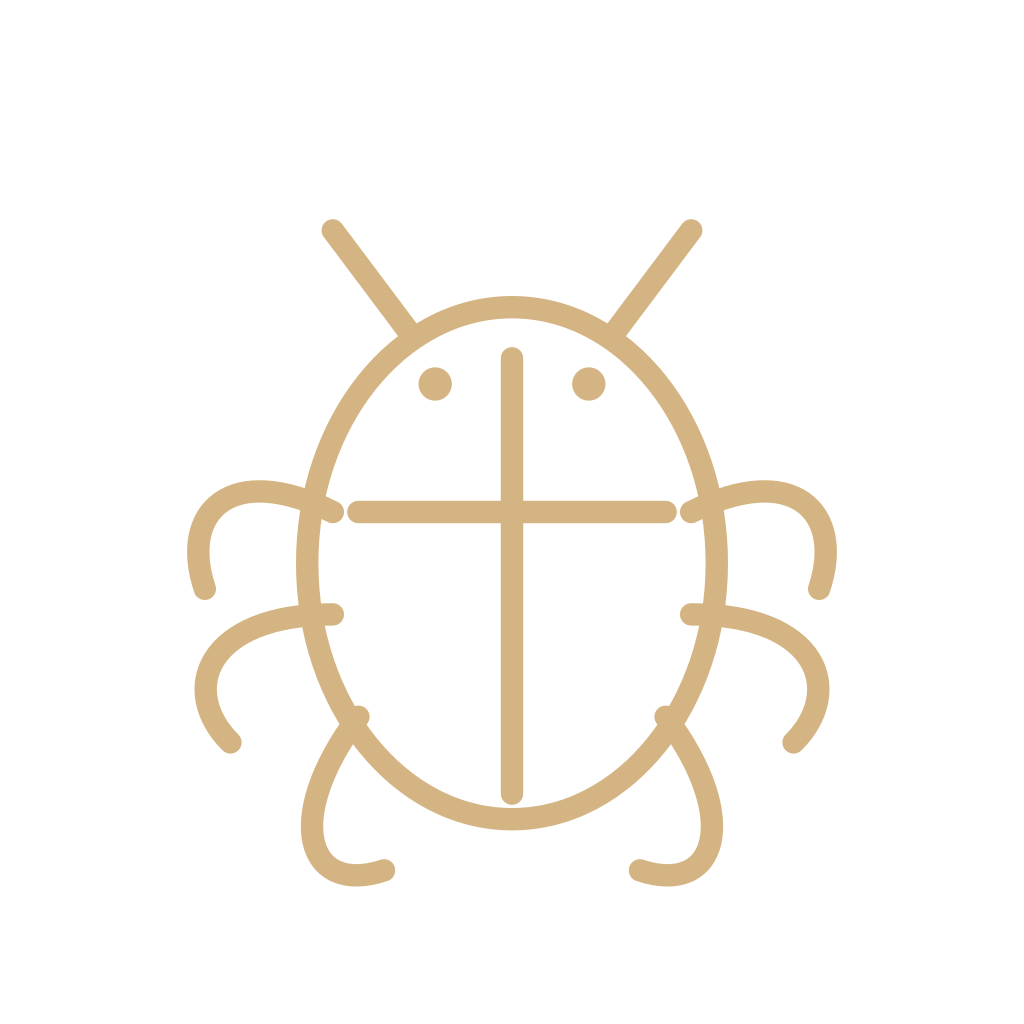
The drawing is the beetle from above: an oval body, a head with two short projections, six legs, and two lines for the wing cases. It is a cabinet drawing, not a photograph of the Sobekemsaf scarab.
Egyptian
The heart is asked to keep quiet
Spell 30B is not a poem about spring. It is a speech put into the mouth of the heart, or put over the heart, so that the heart will not stand up in court and oppose the person it belonged to. The beetle’s body is the place the speech is written. Green stone, dark stone, and faience all occur. The material varies. The job does not. Khepri’s sunrise is the cosmic cousin of the same verb, and temple hymns can use the beetle for the sun’s return. A heart scarab in a burial is using the verb at the moment of judgment, not at dawn in the sky. Keeping those two uses in one sentence is how the amulet gets flattened into a mood. The page keeps the chest, the spell, and the sunrise as three sentences.
In popular culture
product · 20th century
Modern beetle jewellery
Beetle pendants are sold as general signs of renewal.
That shop reading is twentieth century. It is not Spell 30B, and it is not the Sobekemsaf scarab.
SourceWorth knowing
- EA7876 is a royal heart scarab of about 1590 BC. The spell on a heart scarab’s underside is Book of the Dead 30B. Source
Questions
What does a scarab mean?
On a heart scarab it carries Spell 30B, so that the heart will not oppose the deceased. The beetle also pictures kheper, to come into being, and Khepri rolling the sun. Those are related uses. They are not the same object.
How old is the royal heart scarab?
British Museum EA7876 is the heart scarab of King Sobekemsaf, about 1590 BC, in the Second Intermediate Period. Older beetles exist as seals. This page leads with the heart spell and that royal example.
Is every beetle a heart scarab?
No. A seal scarab stamps clay. A heart scarab lies on the chest and carries the spell. A modern pendant may copy the outline and carry neither job.
Near this
Sources
Named when the entry depends on a text, a date, or a standard. Catalog numbers are not invented.
Your margin
Private. It stays in this browser and never joins the canon.
symbol.wiki, edited as Sigilla. Last reviewed 18 October 2026. A reading of public tradition, not a ruling.