At a glance
- Meaning
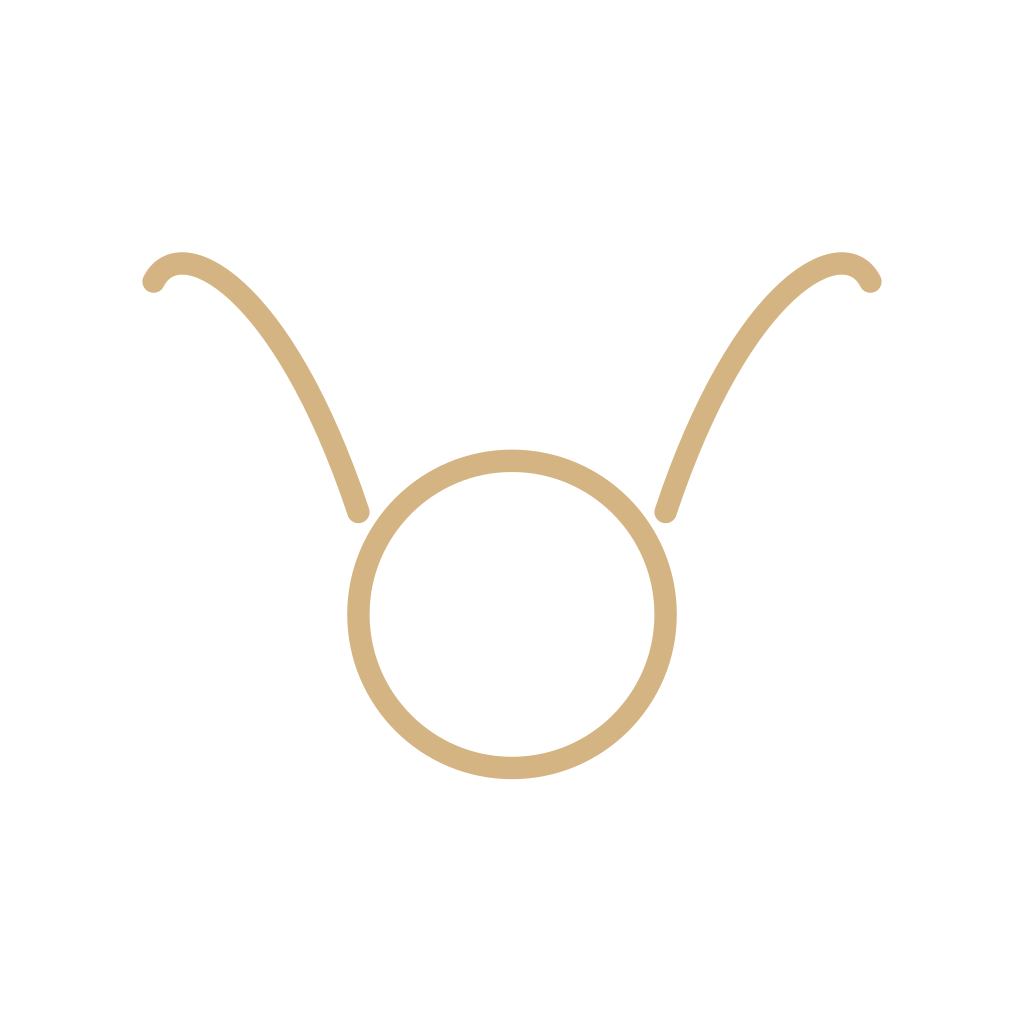
- Taurus is the bull, the second sign of the zodiac. The constellation is ancient. The glyph ♉ — a circle with two horns — is the later printer’s mark for that…
- Origin
- Ancient constellation; the glyph is later
- Also called
- the bull, ♉
Taurus meaning
Taurus is the bull, the second sign of the zodiac. The constellation is ancient. The glyph ♉ — a circle with two horns — is the later printer’s mark for that sign, not the Babylonian picture itself.
A bull on the ecliptic, and a circle with horns in type.
Where it comes from
A bull in this part of the sky is old, shared across Mesopotamian and Greek naming. In the tropical year Taurus follows Aries. The glyph is a circle under a pair of horns, easy to cut in type. Aldebaran and the Pleiades sit in the star-figure. They are not required for the sign as a thirty-degree slice.
Astrology
Fixed, not stubborn as a moral
Traditional astrology calls Taurus fixed earth: what holds. “Stubborn” is the popular reduction. The older job of the sign is a place and a quality, used in a chart, not a personality you are sentenced to.
The glyph
♉ is a circle with two horns. The circle is not the bull’s body in any ancient relief. It is a compact mark that type can hold. The constellation figure, a bull with the Pleiades on its shoulder, is the older picture. Aldebaran is a star in that picture. It is not a stroke of the glyph. Printers from the late medieval astronomical tradition settled the circle-and-horns form because it is unambiguous at the size of a footnote. As a sign, Taurus is the next thirty degrees after Aries in the tropical year, a slice counted from the equinox, not a claim that those stars still stand at that date. The bull of the sky can be drawn with a shoulder and a herd of faint stars. The glyph cannot, and was not asked to. Unicode’s character is U+2649, TAURUS. It copies the printed sort. A circle under horns is easy to confuse with the astronomical sign for Venus if the horns are drawn too tight, and with Mercury if a cross is added underneath. The glyph on this page has horns and no cross. That is the whole distinction type was required to keep. The stars are older than the sort. The sort is what a column of degrees actually prints.
In popular culture
brand · 1985
Ford Taurus
The name began as a project code name taken from the zodiac sign shared by the wives of engineers Lew Veraldi and John Risk.
Name, not glyph.
Sourcecomic · 2009–2016
Homestuck
Each of the twelve trolls carries a Western zodiac sign and a blood colour; the Taurus glyph is worn on a troll's shirt as a personal sigil.
A webcomic turned the horoscope into a caste system; check the troll's name in a fan-written reference before publishing.
Sourcecomic · 1986
Saint Seiya
Twelve temples on the way to Athena, each guarded by a Gold Saint whose Cloth armour derives from the constellation; the Taurus temple is one of them.
Constellation as armour and rank, not horoscope.
SourceWorth knowing
Questions
What does the Taurus mean?
Taurus is the bull, the second sign of the zodiac. The constellation is ancient. The glyph ♉ — a circle with two horns — is the later printer’s mark for that sign, not the Babylonian picture itself.
How do I type the Taurus?
The character is ♉ (U+2649).
Why does Homestuck use Taurus?
Each of the twelve trolls carries a Western zodiac sign and a blood colour; the Taurus glyph is worn on a troll's shirt as a personal sigil. A webcomic turned the horoscope into a caste system; check the troll's name in a fan-written reference before publishing.
Why does Saint Seiya use Taurus?
Twelve temples on the way to Athena, each guarded by a Gold Saint whose Cloth armour derives from the constellation; the Taurus temple is one of them. Constellation as armour and rank, not horoscope.
Near this
Sources
- Greek Taurus, from older bull figures in the sky
- Taurus (astrology)
Named when the entry depends on a text, a date, or a standard. Catalog numbers are not invented.
Your margin
Private. It stays in this browser and never joins the canon.
symbol.wiki, edited as Sigilla. Last reviewed 20 October 2026. A reading of public tradition, not a ruling.