At a glance
- Meaning
- A shoe hung over a door for luck. Why it works is disputed.
- Origin
- A custom in Britain and elsewhere; the Dunstan legend is late
- Often confused with
- Cornicello: An Italian horn. Not an iron shoe.
- Also called
- lucky horseshoe
Horseshoe meaning
A horseshoe nailed over a door is a British and wider custom. The story of Saint Dunstan is late. Why the shoe should help is disputed. The object is a shoe. The protection is a belief about the shoe.
A horseshoe nailed over a door. The luck is real as a custom. The reason is disputed.
The name. A shoe for a horse. The luck is a later use of the blacksmith’s object.
Where it comes from
People nail horseshoes over doors in Britain and in other places, and they expect the house to be safer for it. The custom is widely reported. The explanation is not stable. One story gives the trick to Saint Dunstan, who supposedly nailed a devil to a wall by a shoe and won a promise that horseshoes would bar him. That legend is late relative to blacksmithing. A saint’s anecdote is not the date the first shoe was hung.
Other accounts talk about iron, about the horns of the shoe pointing up so luck cannot run out, or about the shoe as a crescent. The directions contradict each other. Some say the open end must be up. Some say it must be down. A contradiction that old is a sign the custom is practised and the theory is not one theory. This page keeps the why as disputed. It does not pick a winner.
The shoe itself is a craft object. It is iron, shaped to a hoof, pierced for nails. Nothing in the making requires a demon. The protective use is a reading laid on a tool. Modern country decor repeats the reading. The decor is not the origin of iron shoes.
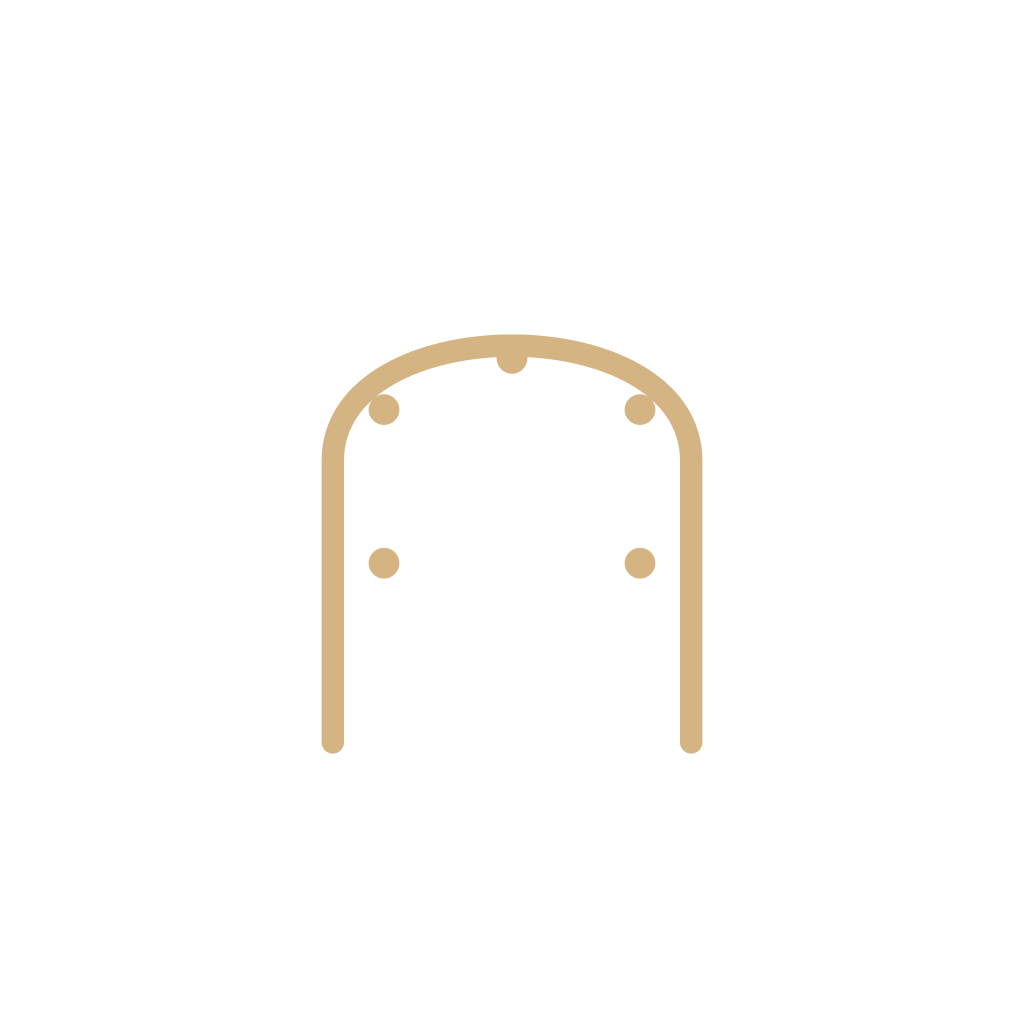
The drawing is the shoe, open end up, with nail holes. The direction is a convention of this drawing, not a ruling in the dispute.
Modern
A custom with several reasons
Modern, here, means the use we can talk about without inventing a first parish. The Dunstan legend is a Christian story attached to an older-looking object. Iron’s power against harmful beings is a folklore motif, not a measurement. Crescent readings borrow a moon the shoe only resembles. When a page lists three reasons, it should not pretend they are one tradition being careful. They are rivals. The honest line is that the shoe is hung, and the reason depends on who is asked. A new house that buys a gilt shoe at a garden shop is in the modern custom even if the story it prefers is medieval. The story’s date and the purchase’s date are both allowed. They are not the same date.
In popular culture
product · 20th century
Country-house ornaments
Gilt and cast shoes are sold as door luck with a short legend attached.
The ornament trade is modern. The disputed why is older than the catalogue, and still disputed.
SourceWorth knowing
- Advice about which way the horns must point is not consistent. The custom is firmer than the theory. Source
Questions
Why hang a horseshoe?
The custom is to nail one over a door. The reasons disagree: Dunstan’s devil, the power of iron, the direction of the horns. This page does not pick one.
Is the Dunstan story the origin?
It is a legend told about the custom. It is late. A legend about a saint is not the first horseshoe, and it is not a date for the first door.
Which way up?
Both ways are insisted on. The disagreement is part of the record. The drawing opens upward and does not settle the argument.
Near this


Sources
Named when the entry depends on a text, a date, or a standard. Catalog numbers are not invented.
Your margin
Private. It stays in this browser and never joins the canon.
symbol.wiki, edited as Sigilla. Last reviewed 18 October 2026. A reading of public tradition, not a ruling.