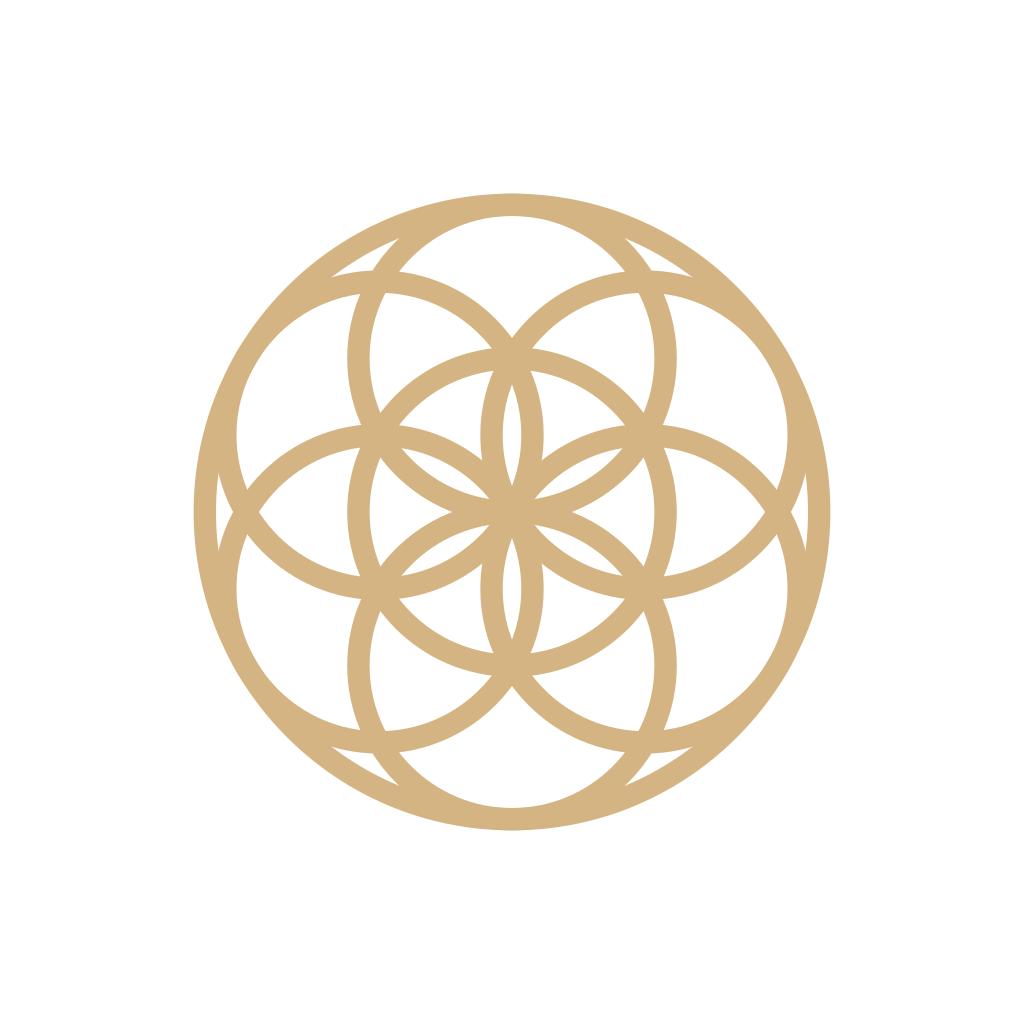
Hexafoil
English buildings, early medieval through the 19th century; the purpose is disputed
Protection symbolsAt a glance
- Meaning
- A six-petal compass flower in English buildings. Its purpose is disputed.
- Origin
- England, early medieval through the 19th century; purpose disputed
- Often confused with
- Seed of life: The same compass flower as geometry. This page is the mark cut in buildings. Pentacle: Five points in a circle, not six petals.
- Also called
- daisy wheel
Hexafoil meaning
A hexafoil is a six-petal flower drawn with a compass, found in English buildings from the early medieval period into the nineteenth century. Historic England calls ritual protection the most widely accepted theory at present. Jennifer Alexander, in 2026, says there is no evidence these are witches’ marks.
A six-petal compass flower cut in English buildings. Protection is a theory, not a settled fact.
The name. Hexafoil, six leaves. Daisy wheel is the name used on site.
Where it comes from
Cut a circle with a compass, then walk the same radius around the rim, and the overlaps draw six petals. That figure is the hexafoil, also called a daisy wheel. It is cut into beams, doorframes, and stone in English buildings across a long span, from the early medieval centuries into the nineteenth. The drawing is easy. The meaning is not.
Historic England’s public note on these marks says they are found in churches, houses, and barns. It records more than one idea of why: a sun motif in later Wicca, an apprentice’s geometry exercise, and ritual protection. It calls ritual protection the most widely accepted theory at present. That sentence is the institution’s caution. Accepted at present is not the same as proved.
On 9 July 2026 the Guardian reported Jennifer Alexander, professor of architectural history at Warwick, saying there is absolutely no evidence that these marks have to do with witches. She describes the daisy wheel as the figure a child makes with a first pair of compasses, and as practice for drawing on stone. Her book on stonemasons’ marks is the study behind that interview. Historic England’s reply, in the same report, welcomes research that adds to the picture. This page will not choose a winner. The compass flower is the object. The purpose is a dispute between a heritage body’s leading theory and a historian who says the evidence for witches is absent.
The drawing is the rosette inside a circle. It is the same construction as a simple seed of life. The seed of life page is the geometry. This page is the mark on the building, and the argument about it.
Christian
A flower with two readings
Christian is the cabinet because the marks sit in English churches and in a Christian country’s houses, not because a creed explains the petal. A compass exercise does not need a creed. A ritual mark, if that theory holds, would be aimed at harm, which is why people file it with protection. Alexander’s point is that skill varies and that the figure is what a compass does. Historic England’s point is that protection is still the theory most people in the field repeat. Both sentences can be printed. Only one should be lived as fact if you are writing a caption, and this caption refuses the single life. Wicca’s sun reading is modern relative to a medieval beam. It cannot be the origin of a petal cut centuries earlier. The circle in the drawing is the compass. The six petals are the overlaps. Count them. A pentagram has five points and is a different page.
In popular culture
product · 21st century
Witches’ marks tours
Daisy wheels are pointed out on tours as ritual protection.
The tour script is contemporary. Alexander’s objection is 2026. Historic England still calls protection the leading theory. The argument is open.
SourceWorth knowing
- Alexander’s phrase for the flower is the figure you make when you are first given compasses. She ties it to apprentice practice. Source
Questions
What is a hexafoil?
Six petals made by walking a compass around a circle. In England it is cut into buildings from the early medieval period into the nineteenth century. Daisy wheel is the other name.
Were they witches’ marks?
Historic England says ritual protection is the most widely accepted theory at present. In July 2026 Jennifer Alexander of Warwick said there is no evidence for that, and that the flower is masons’ geometry. This page does not pick a winner.
Is it the seed of life?
The construction is the same family. The seed of life page is geometry. The hexafoil page is the mark in English buildings and the dispute about why it was cut.
Near this
Sources
Named when the entry depends on a text, a date, or a standard. Catalog numbers are not invented.
Your margin
Private. It stays in this browser and never joins the canon.
symbol.wiki, edited as Sigilla. Last reviewed 18 October 2026. A reading of public tradition, not a ruling.