At a glance
- Meaning
- Odin’s spear. Runes were cut on the point. The sons of Ivaldi made it.
- Origin
- Edda; Sigrdrífumál and Skáldskaparmál
- Also called
- Odin's spear
Gungnir meaning
Gungnir is Odin’s spear. Sigrdrífumál says runes were cut on its point. In Skáldskaparmál the sons of Ivaldi made it. It is a named weapon in the Eddas, not a general Norse spear.
Odin’s spear, with runes cut on the point, made by the sons of Ivaldi.
The name. Old Norse Gungnir, Odin’s spear. The word is used as a name, not as a common noun for every spear.
Where it comes from
Gungnir is the spear that belongs to Odin. The poems do not treat it as one spear among many. Sigrdrífumál, in the list of runes and the places they were cut, names the point of Gungnir. The runes are on the weapon. They are not a modern slogan added under the spearhead by a jeweller. The making is told in the Prose Edda. In Skáldskaparmál the sons of Ivaldi forge the spear among the gifts that come out of that contest of makers. Loki’s role in the contest is part of the same story. The spear is a product of dwarf-craft in the telling Snorri writes down.
Anthony Faulkes’s translation of the Prose Edda, in the Viking Society edition, is the English this page uses for Snorri. The PDF is the public text of that translation. What Snorri preserves is already a Christian Icelander’s arrangement of older stories in the thirteenth century. The spear is not a find from a grave with the name written on it. It is a literary weapon. Archaeological spears are many. None of them comes with a label that says Gungnir. A page that shows a spearhead and calls it the god’s is showing the story’s object, not a catalogued relic.
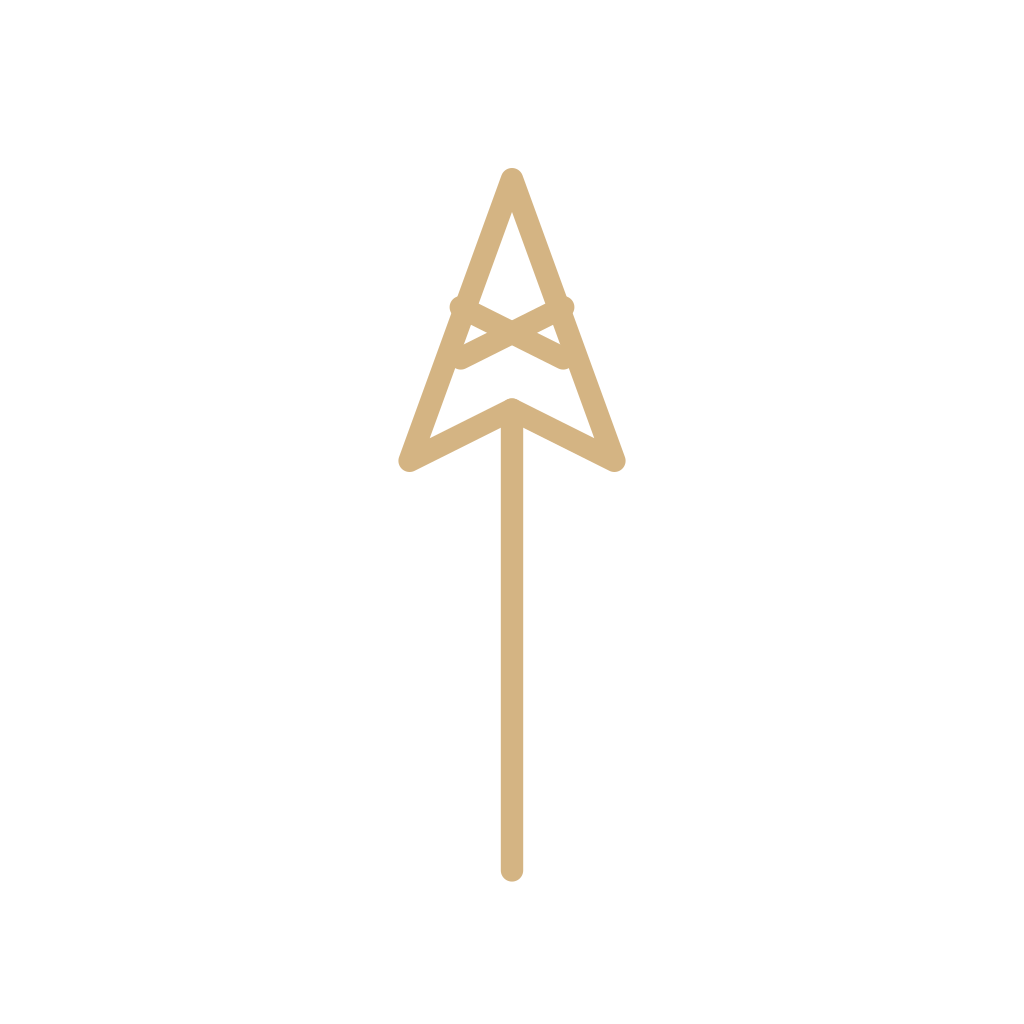
The drawing is a spearhead, a short shaft, and two strokes on the blade standing for the runes the poem names. The strokes are not a claim to reproduce a particular rune-row from a manuscript picture of the spear. The manuscripts do not hand us a standard diagram of Gungnir the way Huld hands us a stave.
Norse
A named point
The runes on the point, in Sigrdrífumál, make the spear a written thing as well as a thrown thing. Odin’s other marks in this cabinet are the ravens and the horse and the tree he hangs on. The spear is the weapon. Mjölnir is Thor’s hammer, and the two should not be paired as a generic warrior set. Different gods, different stories, different objects. The sons of Ivaldi are the makers in Skáldskaparmál. Later fantasy that hands every Norse hero a glowing spear called Gungnir is using the name as a brand. The brand is modern even when the name is old. A rune-stroke on a drawing is a reminder of the poem. It is not an instruction to tattoo the whole futhark down a blade and call the result Eddic.
In popular culture
game · 20th century
Fantasy weapons named Gungnir
Games and comics reuse the name for a hero’s spear.
The reuse is modern. The Eddic spear is the sons of Ivaldi’s making and the runes on the point.
SourceWorth knowing
- Faulkes’s Prose Edda translation is the Viking Society text used here for Skáldskaparmál. Source
Questions
What is Gungnir?
Odin’s spear. Sigrdrífumál lists runes cut on its point. Skáldskaparmál says the sons of Ivaldi made it.
Is there a Viking spear labelled Gungnir?
The name is literary. Graves have spears. They do not come with this name attached. The page draws the story’s weapon, not a museum spear with a false label.
Is Gungnir the same kind of sign as Mjölnir?
No. The hammer is also a pendant type from archaeology. The spear is a named weapon in the Eddas. Different gods, different evidence.
Near this
- MjölnirA hammer that returns, and that hallows.
- Huginn and MuninnTwo ravens Odin fears he will lose. Thought and Memory are the usual glosses, not a proof.
- YggdrasilThe tree at the middle, which is also a gallows.
- SleipnirAn eight-legged horse. The Tjängvide rider is usually read as Odin, and not only as Odin.
Sources
Named when the entry depends on a text, a date, or a standard. Catalog numbers are not invented.
Your margin
Private. It stays in this browser and never joins the canon.
symbol.wiki, edited as Sigilla. Last reviewed 18 October 2026. A reading of public tradition, not a ruling.