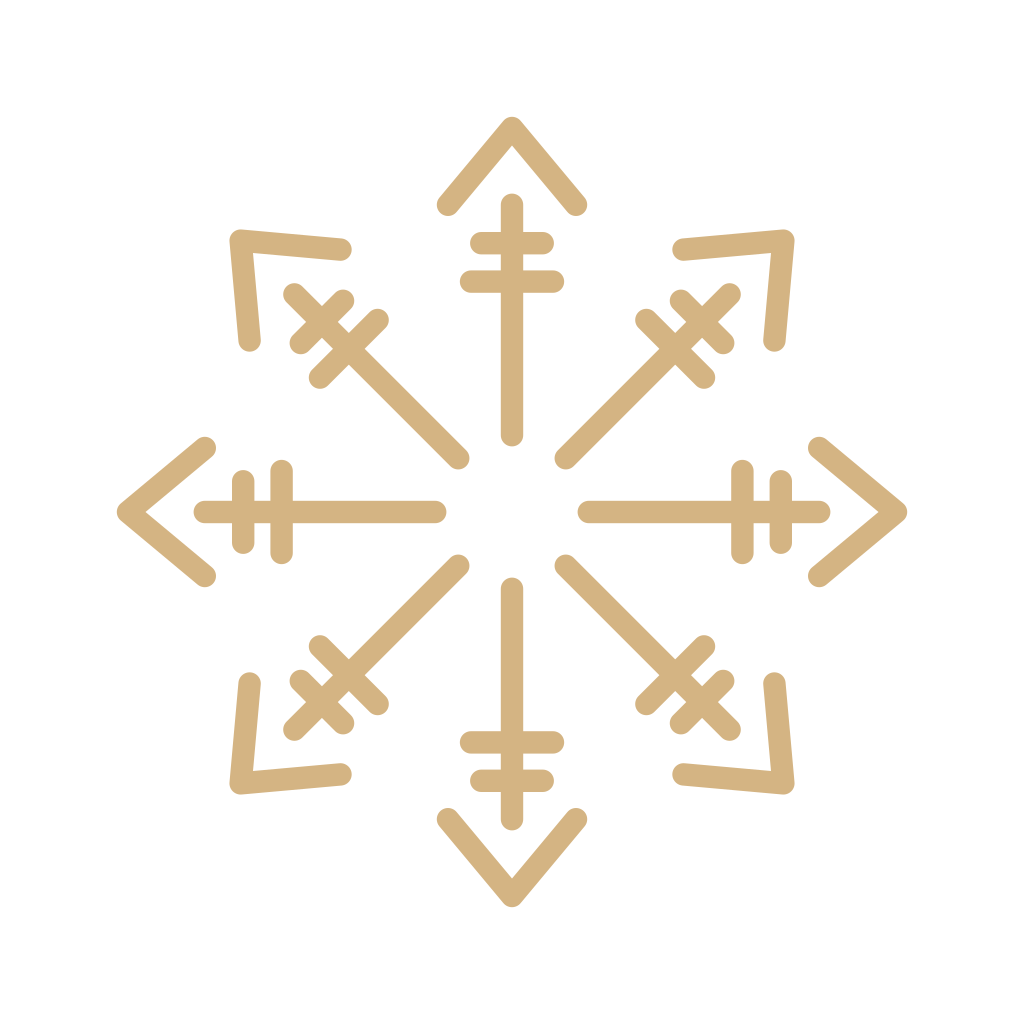
Ægishjálmur
Name in the Edda; eight-armed drawing in Icelandic manuscripts from about 1600
Protection symbolsAt a glance
- Meaning
- The name is medieval. The eight-armed drawing is early modern, not Viking Age.
- Origin
- Eddic name; Icelandic galdrabók drawings from about 1600, Huld 1860
- Often confused with
- Vegvísir: The Huld manuscript way-finder of 1860. A different stave.
- Also called
- helm of awe, ægishjálmr
Ægishjálmur meaning
The name ægishjálmr is medieval. The eight-armed drawing is not. Fáfnir claims a fear-helm in Fáfnismál. The familiar stave is Icelandic, from galdrabók manuscripts about 1600, and in the Huld manuscript of 1860. It is not a Viking Age find.
An Eddic name for a fear-helm, and an early modern Icelandic stave that is not Viking Age.
The name. Old Norse ægishjálmr, a helm of terror or awe. The stave is a later drawing of the name.
Where it comes from
The first thing to say is the split. The name is medieval. The drawing is not. In Fáfnismál the dragon Fáfnir says he wore the fear-helm, the ægishjálmr, to frighten mankind while he lay on his gold. Sigurd answers that the helm shields no one who meets a brave enemy. Henry Adams Bellows translates the claim as the fear-helm worn “to afright mankind.” The poem is a helmet in a story. It does not describe eight arms.
The eight-armed stave is Icelandic and early modern. It appears in galdrabók manuscripts from about 1600. The familiar form, eight radii each ending in a trident, is the one copied from the Huld manuscript of 1860. Guidebooks now put it next to the vegvísir, which is also in Huld and also not a Viking compass. Selling either stave as a Viking tattoo is a twentieth-century trade. The manuscripts are younger than the sagas’ setting, and the sagas are younger than the Viking Age they talk about.
This page does not number Fáfnir’s speech as stanza 16 or 17. A critical line number was not confirmed for the sentence used here. The speech is real. The shop diagram is a different century. The fear-helm in the poem may have been a helmet one wore. The ink figure is a stave one drew. Confusing them is the whole modern muddle.
The drawing is the stave: eight arms from a centre, each ending in a trident with two cross-ticks. It is not a helmet, and it is not the vegvísir’s ring of rune-like staves.
Vegvísir or ægishjálmur?
- What each is
- Both are Icelandic staves. The vegvísir is the way-finder in the Huld manuscript of 1860. The ægishjálmur is a name in the Edda and an eight-armed drawing in galdrabók manuscripts from about 1600.
- How to tell them apart
- The vegvísir is a ring of rune-like arms. The helm is eight tridents from a centre. Neither drawing is Viking Age. The helm’s name is medieval. Its familiar picture is not.
- Where the confusion comes from
- Modern shops sell both as Viking tattoos. The manuscripts are early modern Iceland. Fáfnir’s fear-helm in Fáfnismál is a helmet in a poem, not this stave.
Norse
A helm in a poem, a stave in a book
Fáfnir’s boast is that terror sat on him like a helm while he guarded gold. Sigurd’s reply takes the magic down a step: courage on the other side empties it. That exchange is the medieval meaning of the name. It is a claim about fear, spoken by a dragon who is about to die. The Icelandic magicians who drew staves centuries later inherited a powerful name and gave it a figure. The figure is what people now recognise. Recognition is not a date. Vegvísir is the usual partner in the confusion, because both are round, both are Icelandic, and both are printed on the same souvenir card. Vegvísir’s home in this cabinet is the Huld manuscript of 1860, as a way-finder. Ægishjálmur’s arms are tridents, not the vegvísir’s runic banners. Neither one was dug up from a Viking grave as a finished diagram. A protection line can hold the stave because modern wearers use it as a shield. The shield they mean is the early modern drawing. The poem’s helm is older and shaped like a helm.
In popular culture
product · 20th century
Viking tattoo sheets
The eight tridents are sold as a Viking helm of awe beside the vegvísir.
The tattoo trade is contemporary. The stave is early modern Iceland. The Eddic name is older than the picture and is not a picture.
SourceWorth knowing
- Bellows renders Fáfnir’s line as the fear-helm worn to afright mankind while he lay on the gold. Source
Questions
Is the ægishjálmur a Viking symbol?
The name is in the Edda. Fáfnir’s fear-helm is a medieval poem. The eight-armed stave is Icelandic, from about 1600, and the familiar form is the Huld manuscript of 1860. The drawing is not Viking Age.
What did Fáfnir say the helm did?
He said he wore it to frighten people while he guarded his gold. Sigurd answers that it does not protect anyone facing a brave foe. Bellows gives the speech. This page does not invent a stanza number.
How is it different from the vegvísir?
Both are Icelandic staves, and neither is Viking Age. The vegvísir is the 1860 way-finder. The helm is eight tridents. The poem’s helm is older than both drawings and is not a stave.
Near this
Sources
Named when the entry depends on a text, a date, or a standard. Catalog numbers are not invented.
Your margin
Private. It stays in this browser and never joins the canon.
symbol.wiki, edited as Sigilla. Last reviewed 18 October 2026. A reading of public tradition, not a ruling.