At a glance
- Meaning
- The rearing cobra at the king’s brow, Wadjet of Lower Egypt.
- Origin
- Egypt, early dynastic kingship and after
- Often confused with
- Eye of Ra: The eye of Ra is the goddess sent in anger. The uraeus is the cobra on the brow. Eye of Horus: The wedjat is the restored eye. It is not this snake.
- Also called
- rearing cobra, Wadjet
Uraeus meaning
The uraeus is the rearing cobra worn at the king’s brow. It is Wadjet of Lower Egypt. Battle texts say it destroys the king’s enemies. It is paired with Nekhbet’s vulture, not with the wedjat eye.
The rearing cobra at the king’s brow, Wadjet of Lower Egypt.
The name. From Egyptian jaret, the rearing cobra. Uraeus is the later Greek-based name.
Where it comes from
The uraeus is a cobra reared up, hood open, worn at the brow of the king. The Egyptian name is jaret. The cobra is Wadjet, goddess of Lower Egypt. Nekhbet’s vulture stands for Upper Egypt, and the two animals together are the two lands on the crown. The cobra is not a decoration that wandered onto the forehead. The forehead is the place the goddess watches from.
Battle texts give her a job in a fight. She destroys the king’s enemies. She spits fire. She is not a passive jewel. That is why the mark sits on a protection line: the protection is aggressive. It burns what comes at the king. It is not the same claim as a hand held up against envy, and it is not the restored eye of Horus.
The Metropolitan Museum and the British Museum both hold uraei. British Museum EA16518 is one cobra of this class. Museum cobras vary in material, from gold to faience. The pose does not vary much, because a cobra that is not rearing is not doing this job. A snake in a coil on a box may be another snake. The uraeus is the one at the brow, or made to be read as that one.
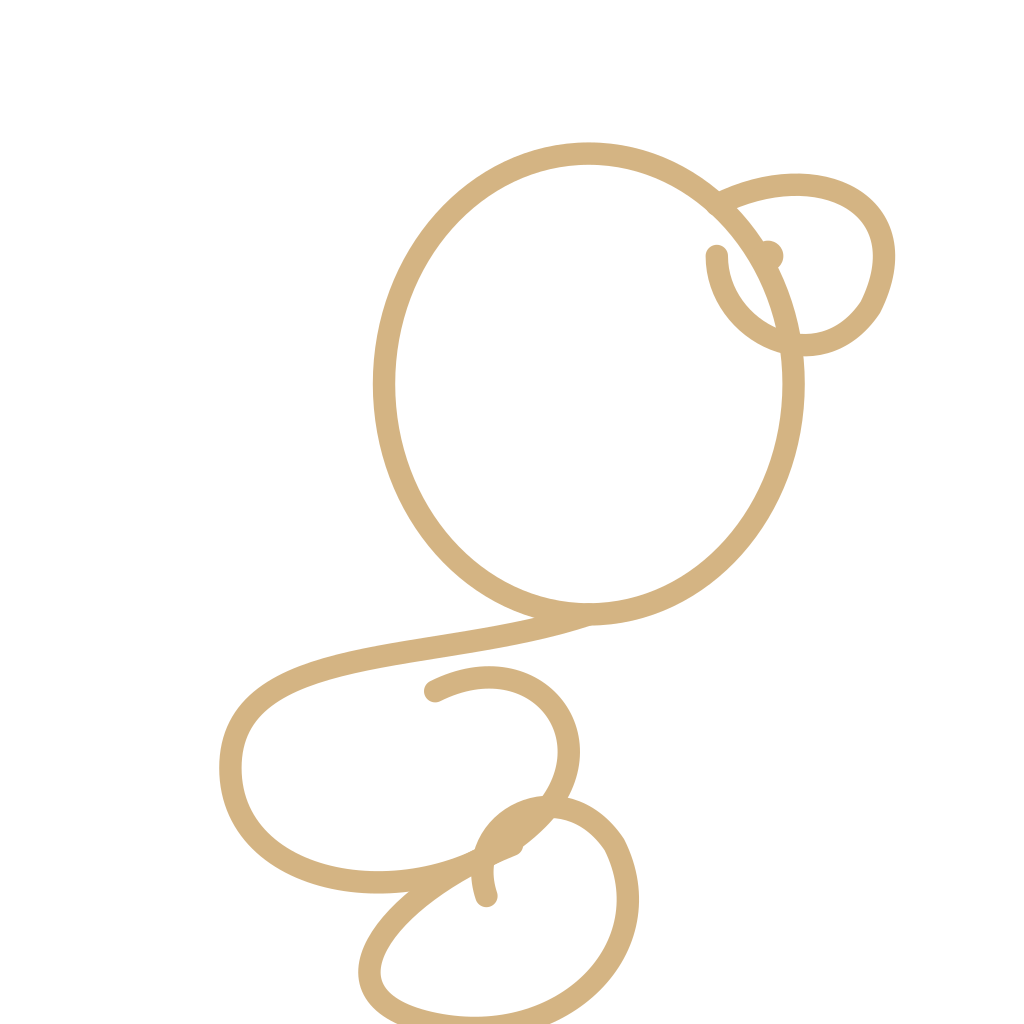
The drawing is a cobra in profile, hood spread, body in two coils. Two coils are enough to say the body is a snake and the head is raised. More coils would become ornament.
Egyptian
Wadjet at the brow
Wadjet is a place as well as an animal: the Delta, Lower Egypt, the north. The vulture is the south. A king who wears both is wearing the map. The fire-spitting texts are the reason a later reader calls the cobra protective. Protection here means the enemy does not arrive intact. The eye of Ra is a different weapon, a goddess sent out in anger and sometimes brought back. The uraeus stays on the head. People mix them because both can be Wadjet and both can burn. The eye is an eye. The uraeus is the snake. A left-or-right rule will not sort them. Read the animal. The Greek name uraeus is how the cobra entered European books. The Egyptian word is older than that name. A page that starts from the Greek will sound as if the crown were a classical ornament. The crown is Egyptian, and the cobra was already at the brow when Greek writers were not yet the audience.
In popular culture
film · 20th century
Film crowns and logo cobras
A rearing cobra on a crown is used as a shortcut for ancient Egypt in costume.
The costume is modern. The brow-cobra as Wadjet is Egyptian, and the film does not become the battle text.
SourceWorth knowing
- The cobra at the brow is paired with Nekhbet’s vulture as Lower and Upper Egypt. Source
Questions
What does the uraeus mean?
It is Wadjet of Lower Egypt, worn as a rearing cobra at the king’s brow. Battle texts say it destroys his enemies. Nekhbet’s vulture is the pair from Upper Egypt.
Is the uraeus the eye of Ra?
No. Both can burn, and both can be tied to Wadjet. The uraeus is the cobra. The eye of Ra is the eye sent out. The wedjat is a third sign, the restored eye.
Why call it a protection?
Because the texts give it the job of destroying what threatens the king. That is a shield that attacks. It is not an amulet against a neighbour’s glance.
Near this

Sources
Named when the entry depends on a text, a date, or a standard. Catalog numbers are not invented.
Your margin
Private. It stays in this browser and never joins the canon.
symbol.wiki, edited as Sigilla. Last reviewed 18 October 2026. A reading of public tradition, not a ruling.