Hydrogen line
Also called 21 centimetre line, 1420 megahertz
Predicted in 1944; the glyph on the plaques is 1972
Modern symbolsHydrogen line meaning
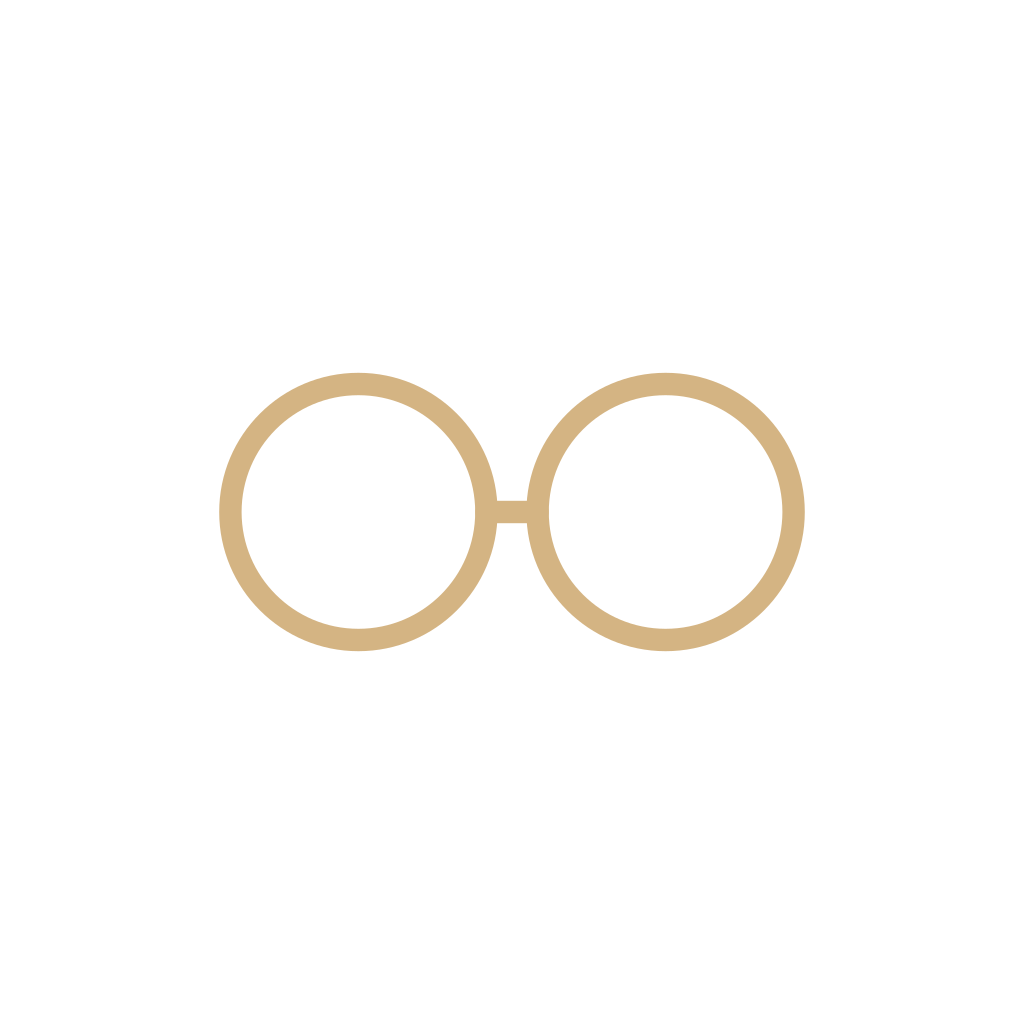
The hydrogen line is the radio emission of neutral hydrogen when its electron flips spin, at 21 centimetres, about 1420 megahertz. Pioneer and Voyager use a drawing of that flip as their unit of length and time. The drawing is two states joined by a bar. It is a unit, not a motto.
A spin-flip of the smallest atom, used as a ruler for strangers.
The name. The hydrogen line is a spectral line, not a line drawn by a cartographer. It sits near 1420 megahertz, a wavelength of 21 centimetres. The glyph of two circles and a bar is the diagram of that transition, drafted onto the plaques.
Where it comes from
Hendrik van de Hulst predicted in 1944 that neutral hydrogen in space should show a line near 21 centimetres, from the hyperfine splitting of the ground state. The electron and the proton each have a spin. When the spins go from parallel to opposite, a photon comes off at a very specific energy. The line was observed in 1951 by Ewen and Purcell at Harvard and, at nearly the same time, by other groups. Radio astronomy used it to map the galaxy, because hydrogen is common and the line cuts through dust that blocks visible light. The plaque designers needed a unit that was not a metre and not a second, both of which are local decisions. They drew the two states of the atom, a connecting line, and the binary 1, and they said: this length, this time. Every other number on the Pioneer plate and on the Voyager cover is a count of that unit. The glyph is therefore a legend, the part of a map that tells you what a mark is worth. It is also a picture of a physical process. The lexicon draws two circles and a bar. It does not draw the rest of either plaque. Those have their own pages. The frequency is often given as 1420.405 megahertz. The round numbers, 21 centimetres and 1420 megahertz, are the ones the public diagrams expect.
Modern
A clock you cannot see
The transition is slow and weak for a single atom. In a cloud of hydrogen it is a useful glow. The plaques treat it as common knowledge for anyone who has built a radio telescope. That is a narrow audience, and it is the audience the designers chose. They did not choose readers of symbols in the literary sense. A page like this one is a translation for the second audience: what the two circles are doing on the metal. They are not decoration beside the human figures. They are the reason the other numbers mean anything.
Geometry
Two circles and a bar
As a figure, the glyph is almost nothing: two circles, a line, a tick for the unit. Geometry here is the economy of the drawing, not a claim that the atom is a Euclidean construction. The same economy shows up in the power symbol, a line and a broken circle, for a different pair of states. Binary loves two states. Hydrogen’s two spins are a fact of the particle. The button’s 1 and 0 are a fact of a standard. The pictures rhyme. The causes do not.
In popular culture
other · 1972 / 1977
Pioneer plaques / Voyager record
The hyperfine transition is the plaque's unit of length and time; the woman is drawn eight wavelengths (168 cm) tall.
The line as a ruler for strangers.
SourceWorth knowing
Questions
What does the Hydrogen line mean?
The hydrogen line is the radio emission of neutral hydrogen when its electron flips spin, at 21 centimetres, about 1420 megahertz. Pioneer and Voyager use a drawing of that flip as their unit of length and time. The drawing is two states joined by a bar. It is a unit, not a motto.
Where does the Hydrogen line come from?
Hendrik van de Hulst predicted in 1944 that neutral hydrogen in space should show a line near 21 centimetres, from the hyperfine splitting of the ground state. The electron and the proton each have a spin.
Near this
- Pioneer plaqueA metal card bolted to a machine, written for a reader who is not from here.
- Voyager Golden Record coverInstructions for a disc: how to play it, and where the player lives.
- Arecibo message1,679 bits, sent once, toward a cluster of stars.
- Wow! signalA strong narrowband spike, circled in red ink, and never repeated.
Sources
Named when the entry depends on a text, a date, or a standard. Catalog numbers are not invented.
Your margin
Private. It stays in this browser and never joins the canon.
symbol.wiki, edited as Sigilla. Last reviewed 20 October 2026. A reading of public tradition, not a ruling.