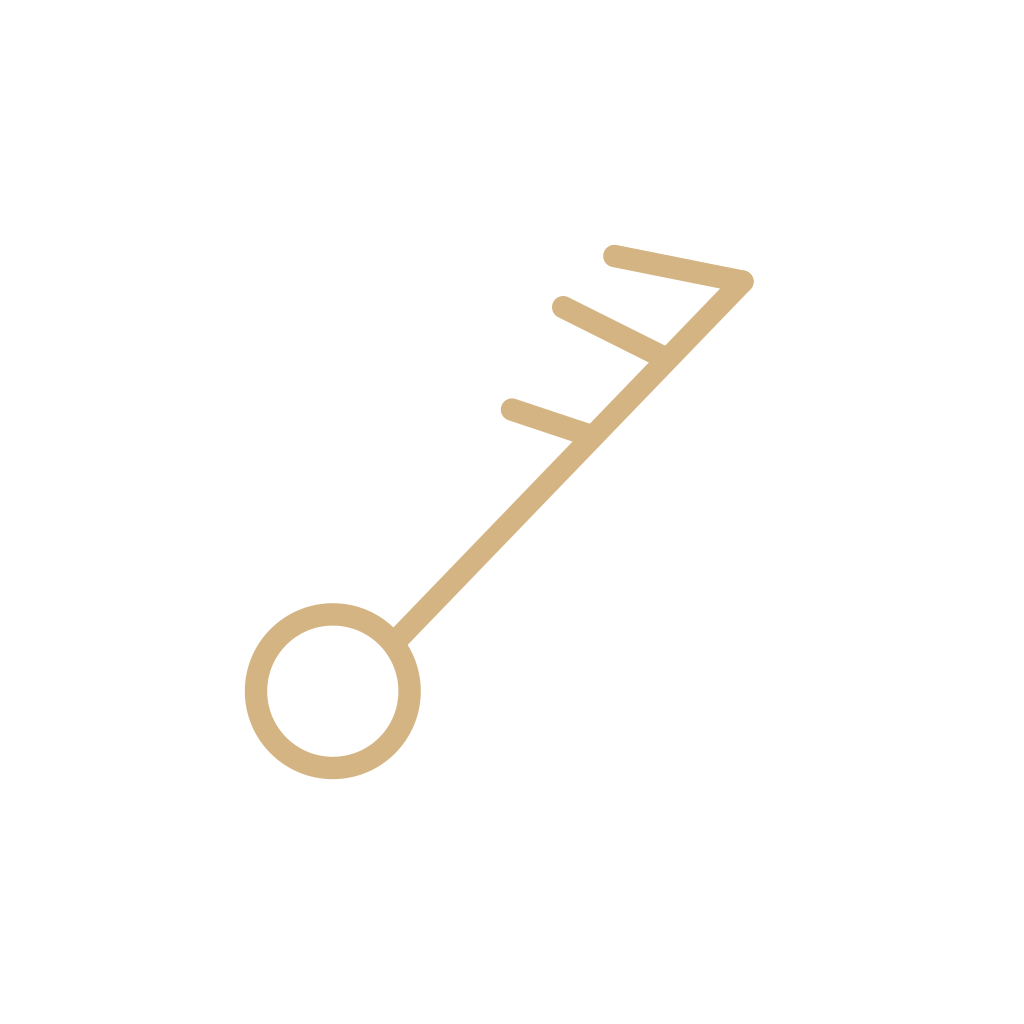
Wind barb
Also called wind flag, wind speed and direction, barb
Station model. What an observer recorded, not a weather-app forecast.
Present weather and station modelsWind barb meaning
A wind barb shows observed direction and speed. The shaft points to where the wind comes from. A short barb is 5 knots, a long barb 10, a pennant 50.
At a glance
- System
- NOAA station model and surface map
- Used for
- Direction from, and speed in knots
- Not the same as
- A windy forecast icon or calm
Staff, barbs, and pennants: where the wind came from, and how fast. Not a forecast wind icon.
The name. The shaft is direction from. The feathers are speed, rounded to five knots. The same barb is used on maps.
Where it comes from
National Weather Service guidance from Honolulu draws calm, 0 to 2 knots, as a circle around the sky cover, and rounds other speeds to the nearest 5 knots. One short barb is 5 knots, one long barb is 10, and at 50 knots the barbs become a pennant, with long and short barbs added again above that. The shaft points to the direction from which the wind is blowing. The Weather Prediction Center uses the same count on its station-plot page: pennant 50, long barb 10, short barb 5, and calm as the circle with no barb. Surface maps reuse the barb. A forecast “windy” icon does not.
The line drawing is original to this cabinet. It is not an agency logo, a vendor icon, or the emoji for the same idea.
Weather
What it means
Read the feathers first, in fives, then follow the shaft back to the sky. A barb on the northeast side of the station means the wind is coming from the northeast, not going there. The drawing on this page is one long barb and one short one, 15 knots, on a shaft, so the arithmetic is visible. It is an example, not a live observation.
Variants
Pennant
Fifty knots is a pennant, not five long barbs. Higher speeds add pennants and then barbs again. The Honolulu page states that rule.
On a map
The synoptic line uses this same mark for wind direction and speed. Fronts do not replace it. A map can carry barbs and triangles at once, and they answer different questions.
Worth knowing
- A pennant is 50 knots, a long barb is 10, and a short barb is 5. Calm, on the Honolulu guide, is a circle for 0 to 2 knots. Source
Questions
How do you read a wind barb?
The shaft points to where the wind comes from. A short barb is 5 knots, a long barb is 10, and a pennant is 50. Speeds are rounded to the nearest 5 knots.
Which way is the wind going?
The opposite of the shaft. If the feathers are on the north side, the wind is from the north, blowing toward the south.
Is a wind barb a forecast?
No. It is an observation, and the same mark is plotted on surface maps. A weather-app wind icon only says that wind is expected.
Near this
- Calm windA circle and no staff. The wind at the station was calm. Not a clear-sky icon.
- WindA forecast icon for expected wind. Not a wind barb, and not the wind-face character.
- Station modelThe whole observation plot. Sky in the circle, wind on the barb, weather only if something is falling or the air is thick.
- Wind faceU+1F32C WIND FACE. A face blowing wind. Not a wind barb and not a windy forecast icon.
Sources
- National Weather Service, wind barbs
- Weather Prediction Center, station plot
- NOAA JetStream, station models
Named when the entry depends on a text, a date, or a standard. Catalog numbers are not invented.
Your margin
Private. It stays in this browser and never joins the canon.
symbol.wiki, edited as Sigilla. Last reviewed 18 October 2026. A reading of public tradition, not a ruling.