At a glance
- Meaning
- One path in seven circuits. Unlike a maze, it does not branch.
- Origin
- Knossos coins; Chartres pavement about 1200
- Often confused with
- Ouroboros: A serpent that closes. A labyrinth is a path you walk to a centre.
- Also called
- Cretan labyrinth
Labyrinth meaning
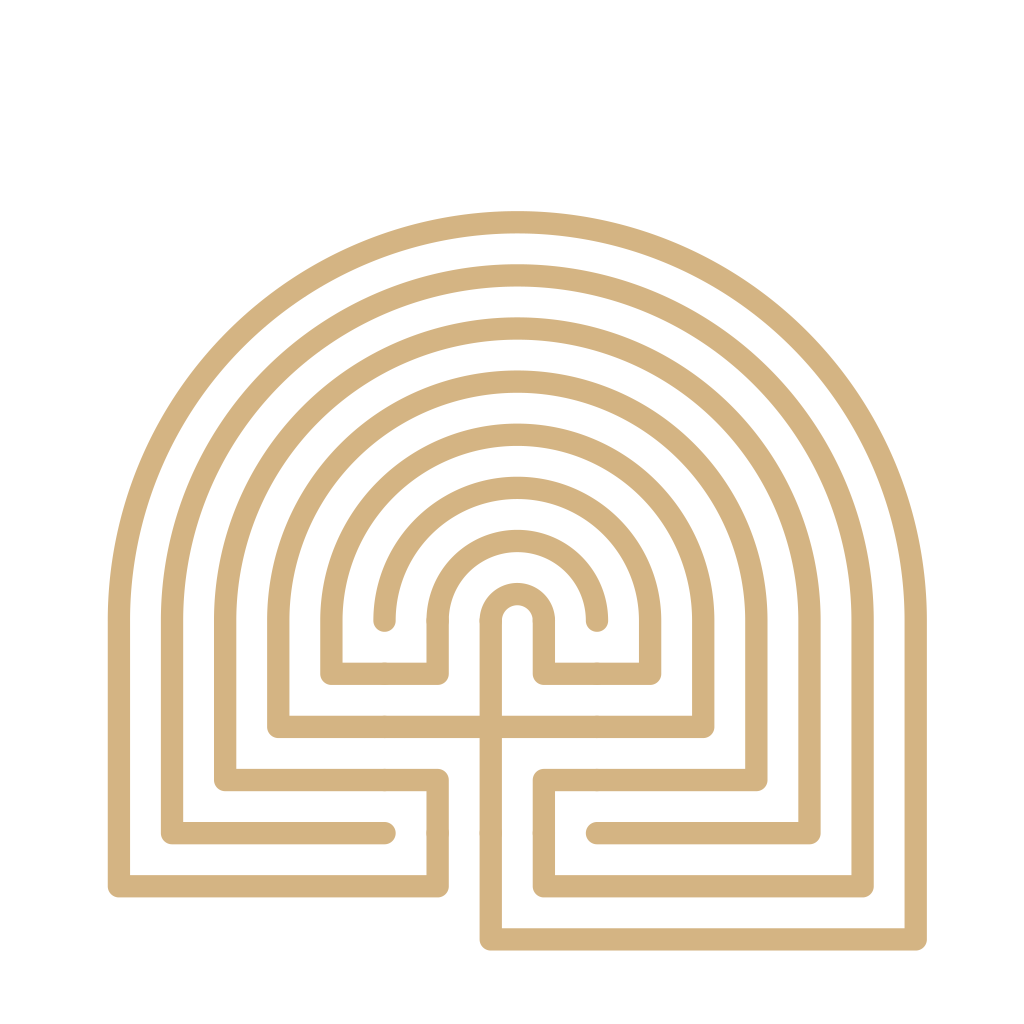
The classical labyrinth is a single path in seven circuits. It appears on coins of Knossos. The pavement at Chartres is about 1200. A labyrinth has no branches. A maze does. The drawing is the seven-circuit path.
One path, seven circuits, with no choices. A maze is the other idea.
The name. Greek labyrinthos. A maze, in modern English, is a puzzle. A labyrinth in the old pattern is one path.
Where it comes from
The classical labyrinth is unicursal. One path runs from the entrance to the centre. You cannot get lost by choosing, because there is no choice. You can only persist. Coins of Knossos carry the pattern. The Minotaur story, Theseus and the thread, is the myth people attach. The pattern on the coins is a path, not a portrait of a monster. A maze with dead ends is a different invention. English now uses maze and labyrinth as synonyms. The synonym is the confusion.
The great pavement in Chartres Cathedral is the medieval example people travel to see, laid around 1200. It is a church floor, walked as a devotion, not a Cretan basement. The path is still one path. The setting has changed. A Christian floor can use a Greek-shaped path without becoming the Minotaur’s house. The dates stay apart: coins and myth on one side, a cathedral pavement on the other.
The circuit line of this lexicon is for marks that close or return. The labyrinth belongs there because the path folds back on itself until it arrives. It is not the ouroboros. Nothing eats its tail. A walker finishes.
The drawing is the classical seven-circuit labyrinth. It is the angular Cretan type, not the rounded Chartres pavement. The caption says which pattern you are looking at.
Hellenic
No choice, which is the point
A maze tests a decision. A labyrinth tests a patience. That difference is the whole page. Later puzzle books and hedge mazes trained readers to expect forks. They then look at Knossos coins and Chartres and feel tricked when the line does not branch. The trick is the modern expectation. Chartres around 1200 is a walk in a church. The Cretan pattern is older as a design on coins and as a myth. Walking a church floor as if it were a monster’s prison is a later reader mixing two true things into one false picture. The thread in the myth is a technology for a branching space in the story. The pattern drawn here does not need a thread. It needs feet. Seven circuits are the classical count. More circuits exist in other designs. This page does not draw them.
In popular culture
product · modern
Hedge mazes and puzzle books
Forking mazes taught people to expect choices the old path does not offer.
The synonym in modern English is the later reader. Knossos and Chartres do not become one building because of it.
SourceWorth knowing
- The Chartres pavement is about 1200. It is a church floor on a single path, not a copy of a basement. Source
Questions
What is the difference between a labyrinth and a maze?
A classical labyrinth has one path and no forks. A maze branches and can trap you. Modern English treats the words as the same. The patterns are not.
Where is the old pattern?
On coins of Knossos, and, much later, in the pavement at Chartres of about 1200. The drawing on this page is the seven-circuit Cretan path, not the rounded cathedral floor.
Does the path need a thread?
The myth of Theseus gives him a thread for a dangerous house. The unicursal pattern does not branch. The thread belongs to the story’s maze-like house. The coin pattern is one line.
Near this
Sources
Named when the entry depends on a text, a date, or a standard. Catalog numbers are not invented.
Your margin
Private. It stays in this browser and never joins the canon.
symbol.wiki, edited as Sigilla. Last reviewed 18 October 2026. A reading of public tradition, not a ruling.