One closed line
Symbols of return and rebirth
Marks that have no outside.
This line is marks that have no outside. The ouroboros eats its tail. The Möbius strip has one surface. Infinity, as a lemniscate, is a later mathematical sign that people read as the same refusal to stop. The yin-yang has no outside because each half already holds the other. The ensō is a circle that may not even close. Jörmungandr is the Norse world-serpent, a cousin of the tail-eater with a different mythology. The endless knot will not give you one strand. The vesica is the odd one out: it is an overlap, a lens, and it does have an outside. It is here because the lens is how a closed figure begins. Read them as a line if you want the family. Read the pages if you want the centuries, which do not match. Return is the family resemblance. It is not a license to treat a theorem and a myth as one object.
The line is a resemblance, not a genealogy. A serpent that eats itself, a brushed circle, a one-sided strip, and a sign for a magnitude all refuse a simple outside. They do it for different reasons and in different centuries. Reading them together is a way to see the family. It is not a way to date them. The pages are the dates. The line is only the invitation.
Start here. Ouroboros. The tail-eater is the picture the whole line is answering, whether the later marks know it or not.
- 1OuroborosThe serpent that eats itself, and so has no outside.
- 2JörmungandrThe serpent around the world of men. Not the alchemical tail-eater.
- 3EnsōOne brushstroke, usually left unfinished.
- 4Yin and yangTwo phases of one motion, each carrying the seed of the other.
- 5InfinityA typesetter’s sign that escaped into metaphysics.
- 6Möbius stripA strip with a half-twist. One side. One edge. A dated invention.
- 7Endless knotA line with no start, so nothing in it stands alone.
- 8Vesica piscisTwo equal circles, each through the other’s center. A third shape appears.
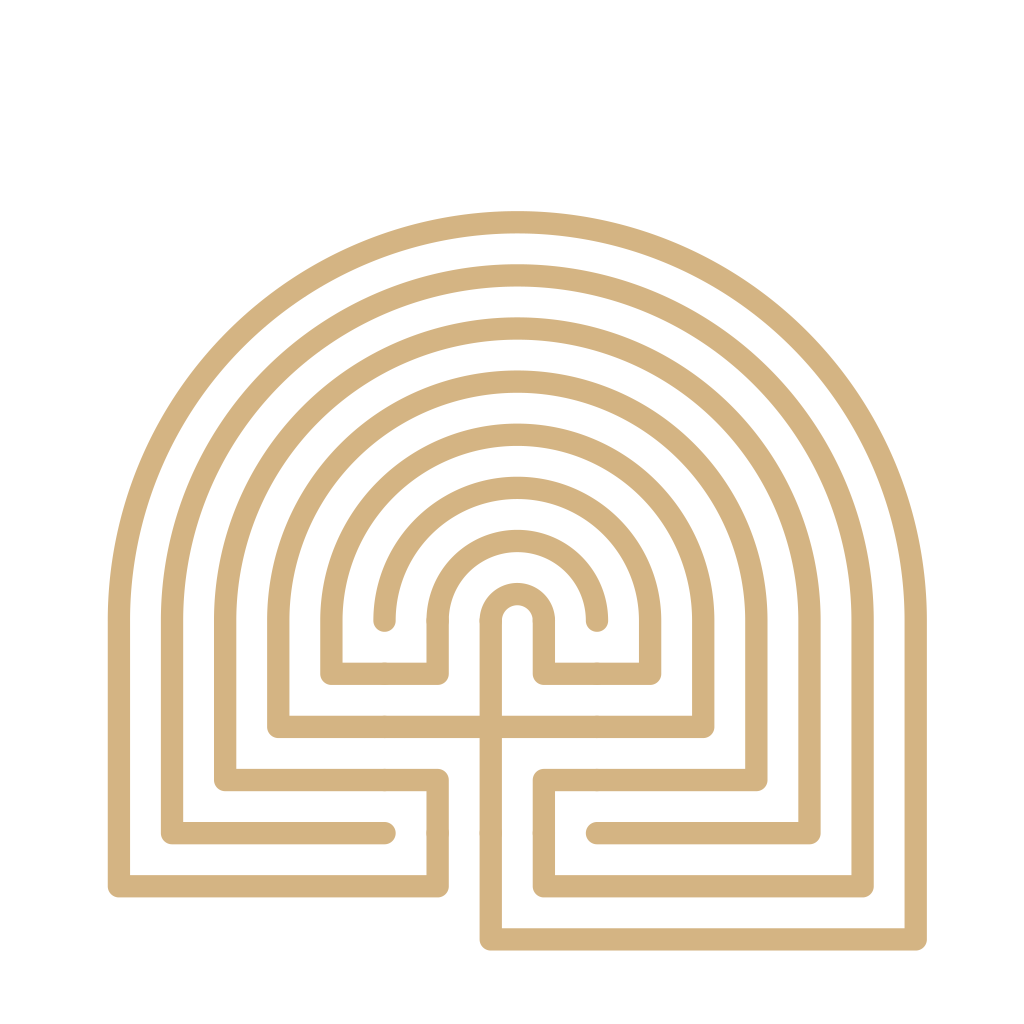
- 9LabyrinthOne path, seven circuits, with no choices. A maze is the other idea.
Questions
What are the main symbols in this line?
The line runs from the ouroboros and Jörmungandr through the ensō, the yin-yang, the infinity sign, the Möbius strip, the endless knot, and the vesica piscis. They share a visual argument: a path that returns. They do not share an origin. A Greek-Egyptian serpent, a Japanese brush circle, and an 1858 surface are neighbors here and strangers in history.
What is the oldest symbol in this line?
The ouroboros, as a tail-eating serpent with a cosmological caption, is the oldest member that means what the line means. Circles are older and do not count. The Möbius strip is 1858. The lemniscate as infinity is the seventeenth century, Wallis. The ensō is a practice of brushing, not a dated ancient device. Start with the serpent if you want age. Start with Möbius if you want a theorem.